Sacred Symbolism
The Navratna: Why Nine Gemstones, and Why in That Order
28 May 2025 · 7 min read
Few arrangements in the world of gemstones are as precisely specified as the Navratna. Nine stones, each assigned to a celestial body, each given a fixed position relative to the others. Change the order and, traditionally speaking, you no longer have a Navratna at all.
The nine stones
Ruby stands for the Sun and takes the centre. Around it sit pearl for the Moon, red coral for Mars, emerald for Mercury, yellow sapphire for Jupiter, diamond for Venus, blue sapphire for Saturn, hessonite for the ascending lunar node and cat's eye for the descending node.
Why the centre matters
The Sun holds the middle because the arrangement is a map, not a pattern. The other eight are placed in their traditional compass positions around it, so the whole composition reads as a small model of the sky rather than a decorative circle of colour.
Composition as craft
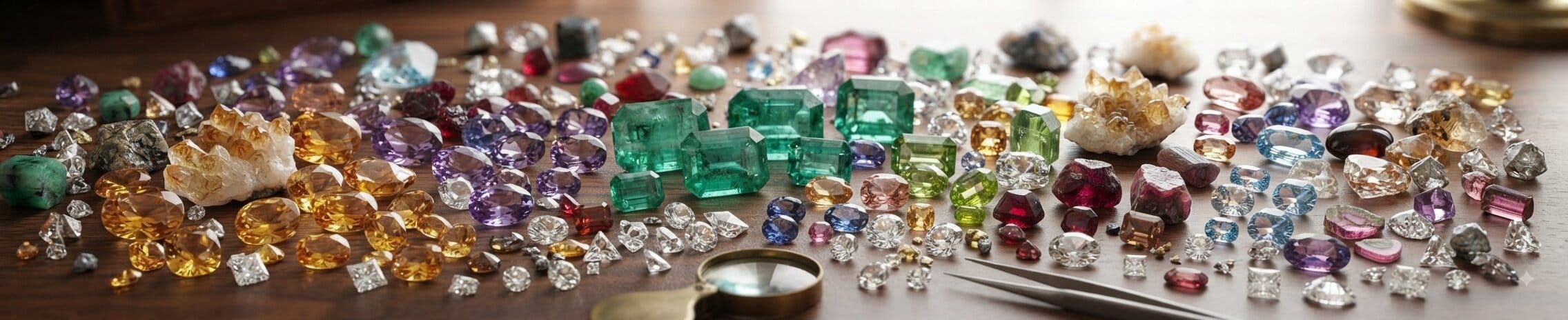
Laying a Navratna well is unexpectedly difficult. Nine stones of nine different materials means nine different densities, hardnesses and refractive behaviours sitting side by side. Balance the sizes badly and one stone shouts over the rest. The traditional order fixes the positions, but the proportions are the maker's judgement, and that judgement is what separates one piece from another.
Wearing and keeping
Some collectors acquire a Navratna for its symbolism and some purely for the craft of it. Either is a good reason. Presented under glass rather than set into metal, the arrangement stays legible as a map, which is how it was always meant to be read.