Gemstone Guides
How to Choose a Natural Gemstone: A Collector's Guide
12 June 2025 · 6 min read
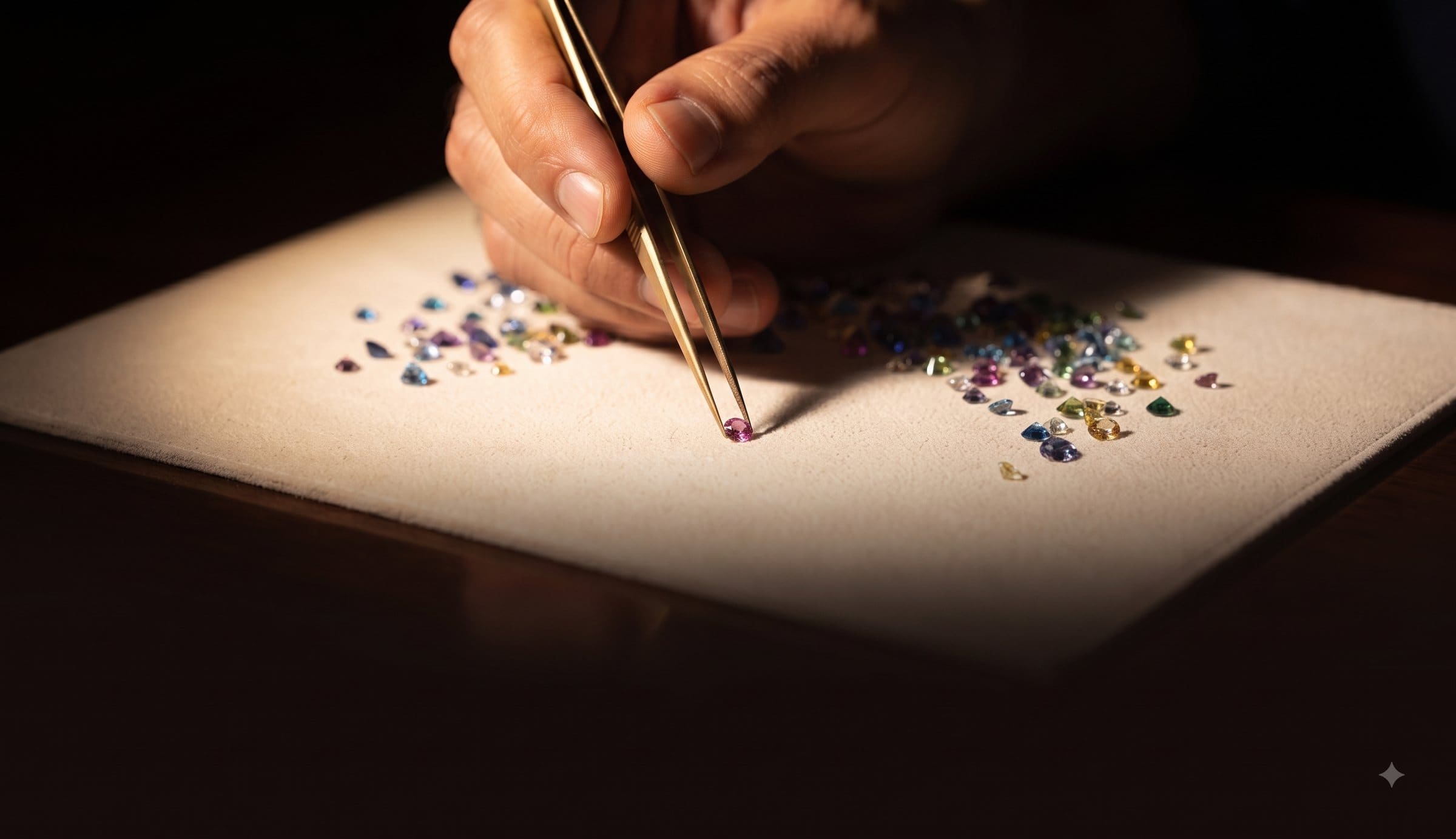
Buying a natural gemstone for the first time can feel like being asked to judge a language you do not speak. The vocabulary is technical, the prices vary wildly, and almost every seller sounds equally confident. The good news is that most of what matters can be judged with your own eyes, in ordinary daylight, once you know what you are looking at.
Start with colour, not clarity
With coloured stones, colour carries most of the value. Look for depth without darkness. A fine blue sapphire should read clearly blue at arm's length, not black in shadow and not washed out under a lamp. Turn the stone slowly. If the colour drains away at certain angles, the cut is fighting the material.
Clarity is a question of character
Diamonds are graded for the absence of inclusions. Coloured stones are not, and should not be. Tiny internal features are the fingerprint of natural growth, and in emeralds in particular they are expected. What you want to avoid is anything that reaches the surface or sits directly under the table where it will catch the eye and weaken the stone.
Cut is the part nobody mentions
A well cut stone returns light evenly across its face. A poorly cut one has a dull window in the middle where you can read text straight through it. Hold the stone over a printed page. If you can make out the letters through the centre, light is passing through rather than bouncing back.
Origin, treatment and paperwork
Origin affects price, sometimes dramatically. So does treatment. Most stones on the market have been heated, which is long accepted; other treatments are not. This is exactly what independent certification is for. Ask for the report, read what it says about treatment, and be wary of any seller who treats the question as an inconvenience.
Buy the stone, not the grade
Two stones with identical paperwork can look completely different in the hand. Certificates confirm what something is. They cannot tell you whether it moves you. Look at as many stones as you can, in daylight, next to each other, and trust what your eye keeps returning to.